
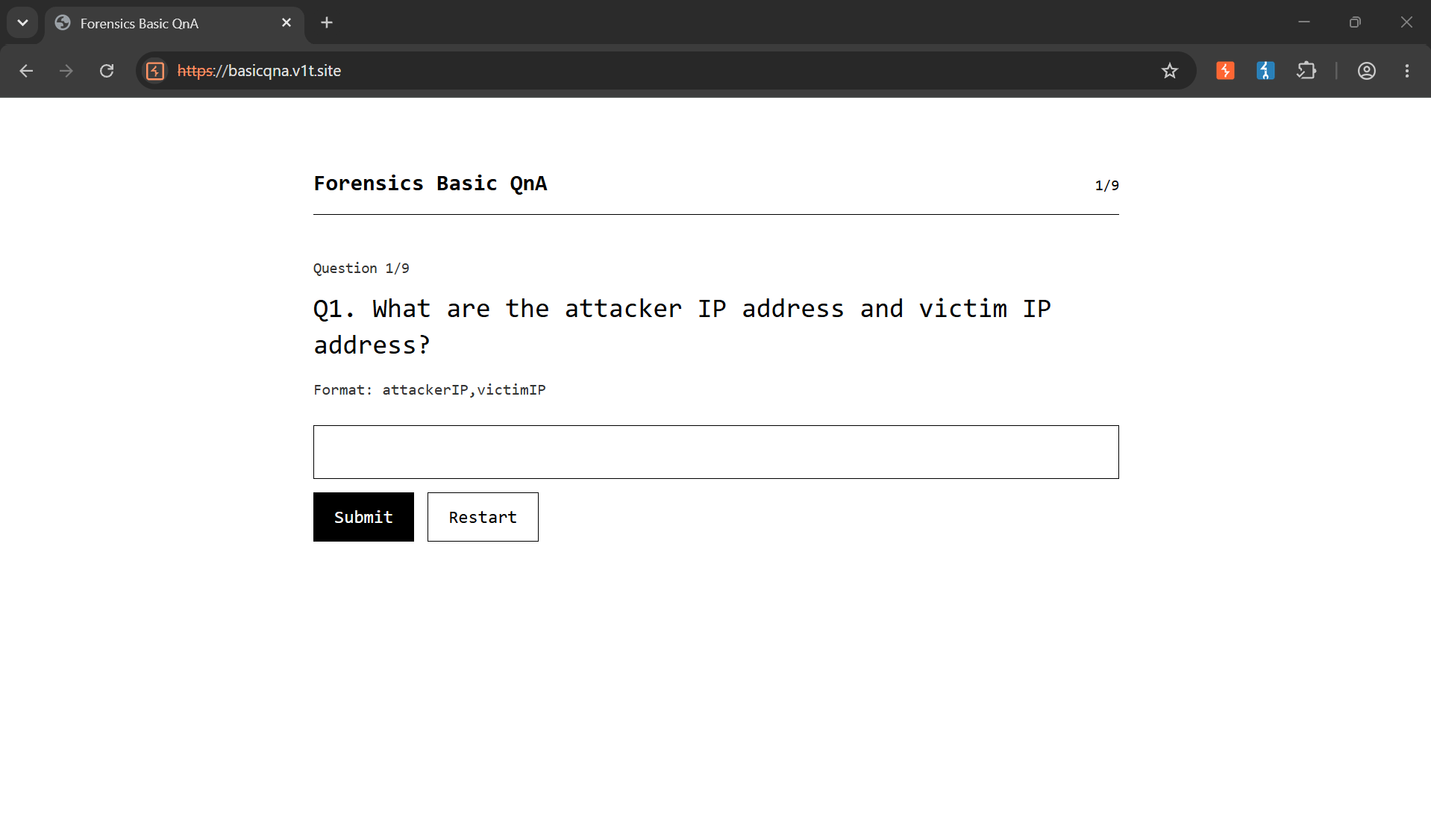
Connect to https://basicqna.v1t.site/ and answer the questions pertaining to the packet capture.
Go to Statistics > Conversations > TCP.
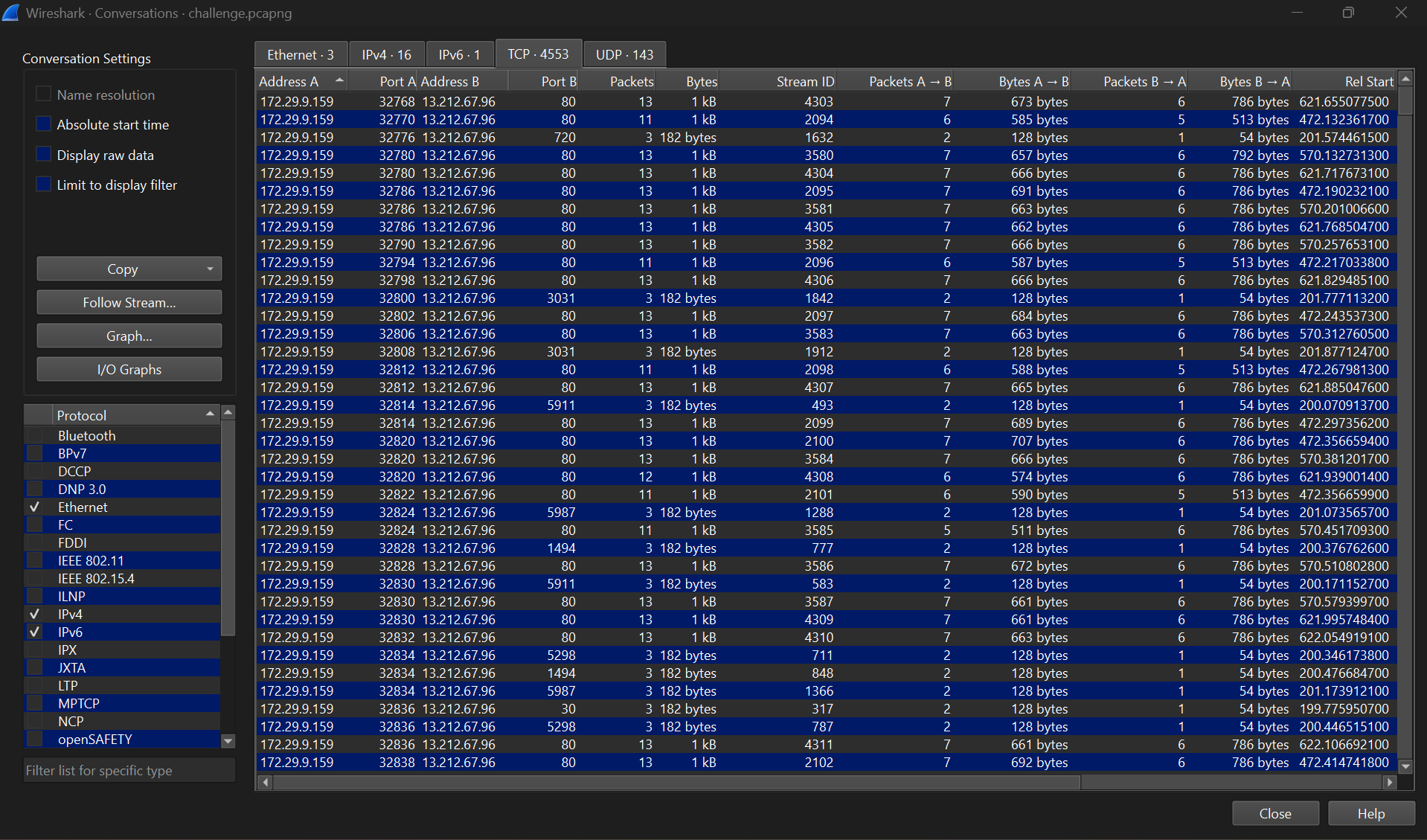
Our answer is unfold, since it was packed with 172.29.9.159 as address A and 13.212.67.96 as address B.
Answer Q1: 172.29.9.159,13.212.67.96
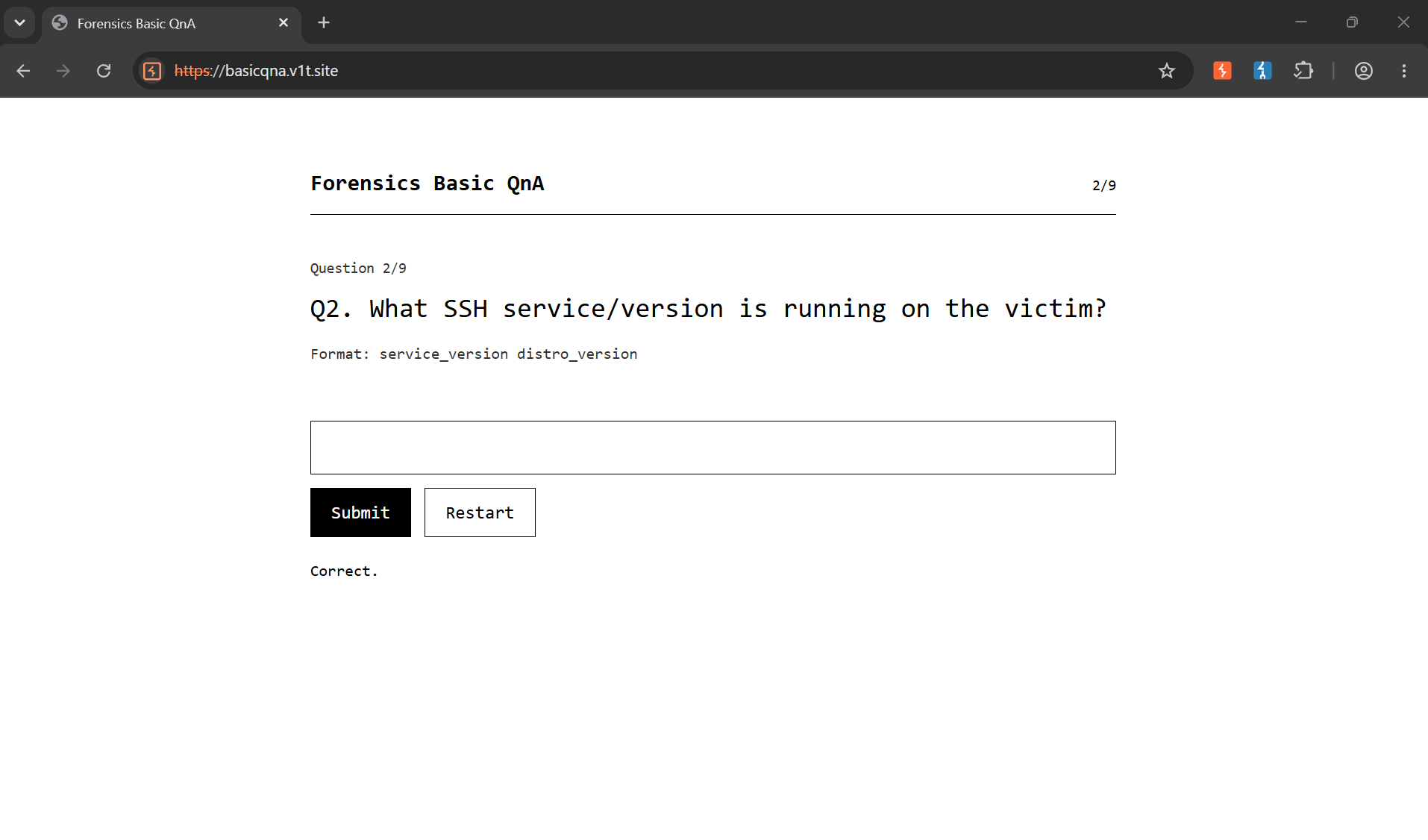
The Secure Shell (SSH) service operates by default on network port 22 to provide encrypted, secure remote access to computer systems.
We filter the packet with tcp.port == 22
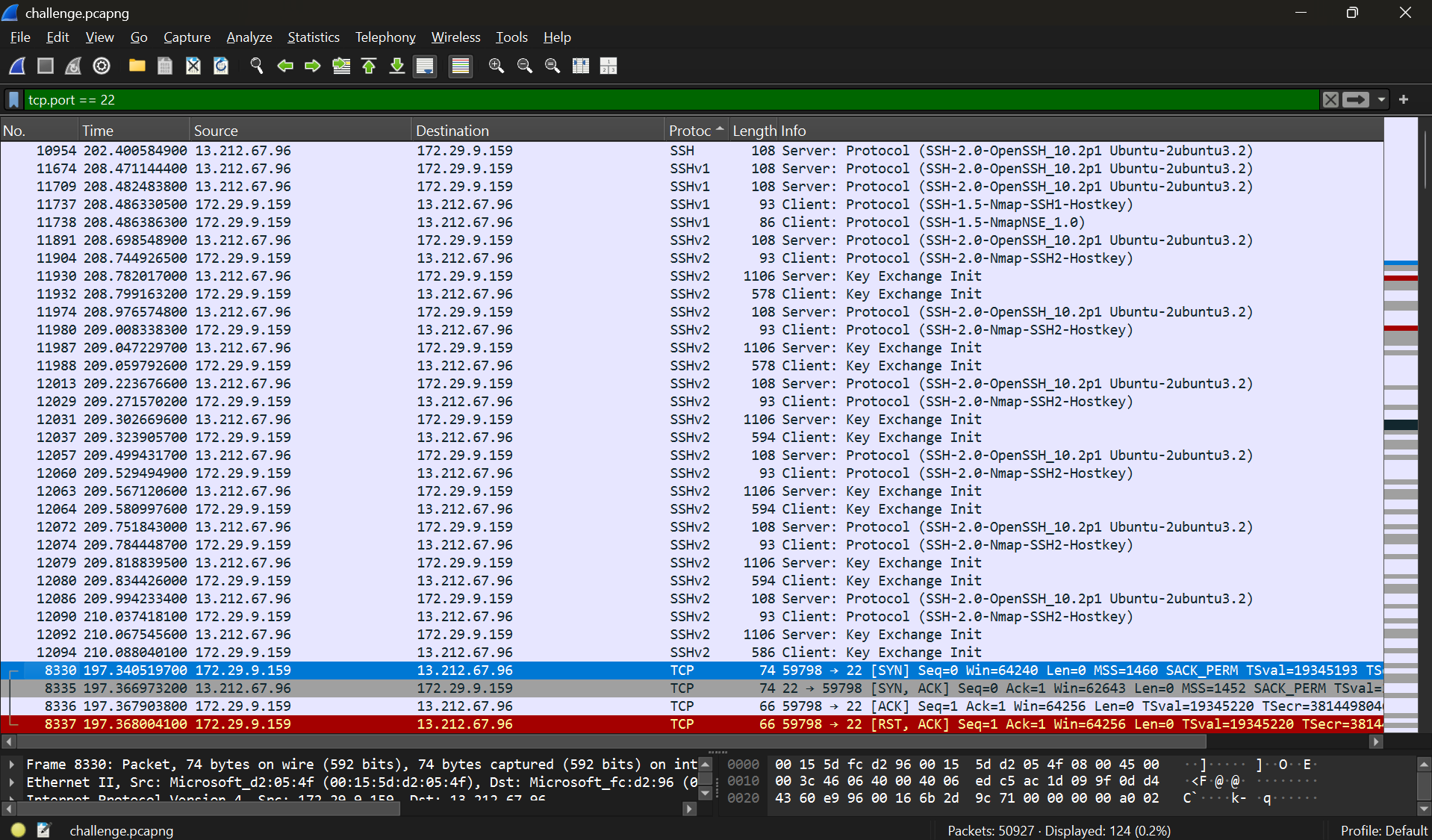
Answer Q2: SSH-2.0-OpenSSH_10.2p1 Ubuntu-2ubuntu3.2
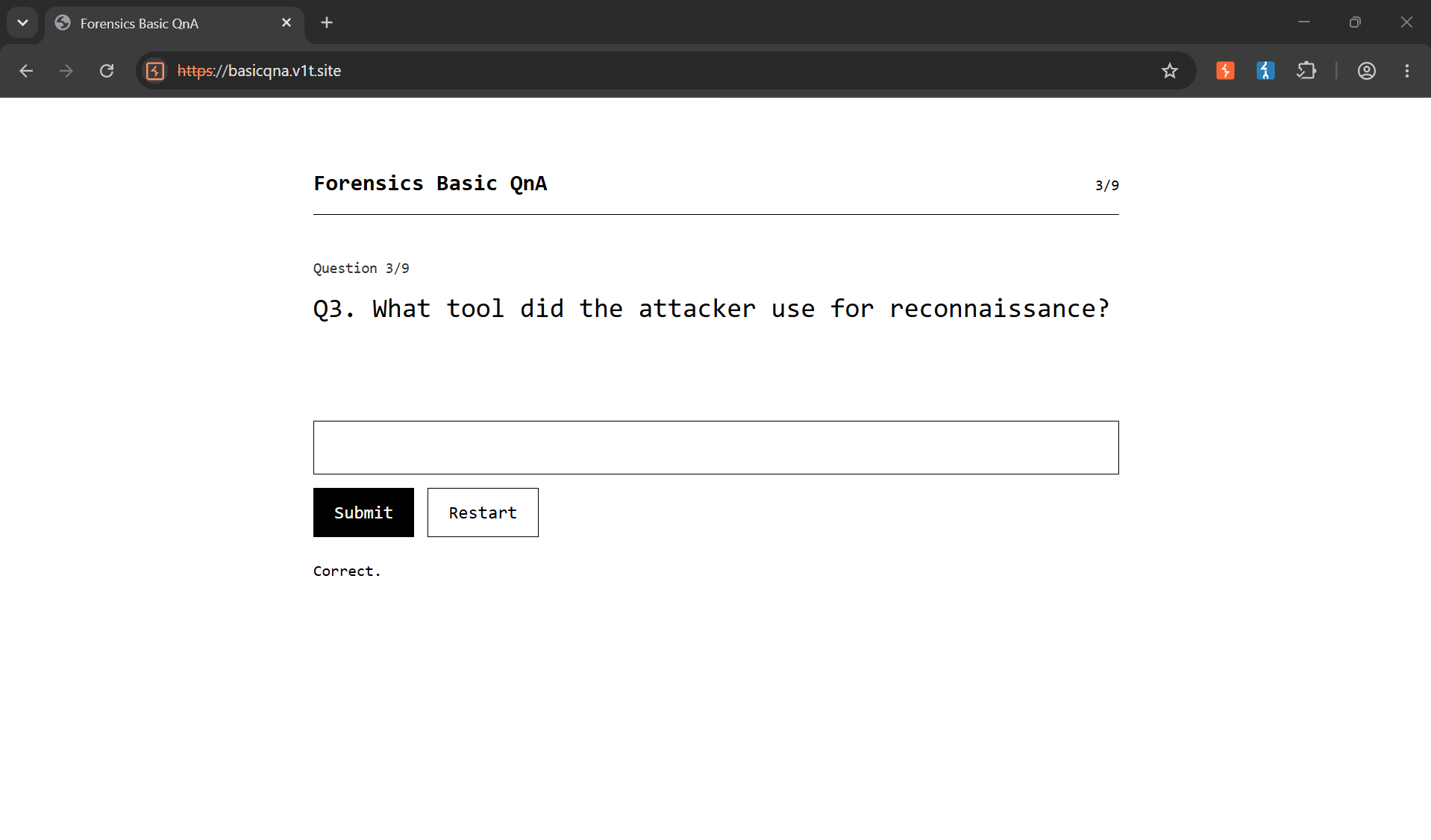
Nmap is the most common and widely used tool for active network reconnaissance, port scanning, and host discovery.
And indeed, we can see its presence in the image above.
Answer Q3: nmap
I tried to Ctrl + F and try to search for sussy keywords (by sussy, I mean “affirmative”). true returns me the right one!
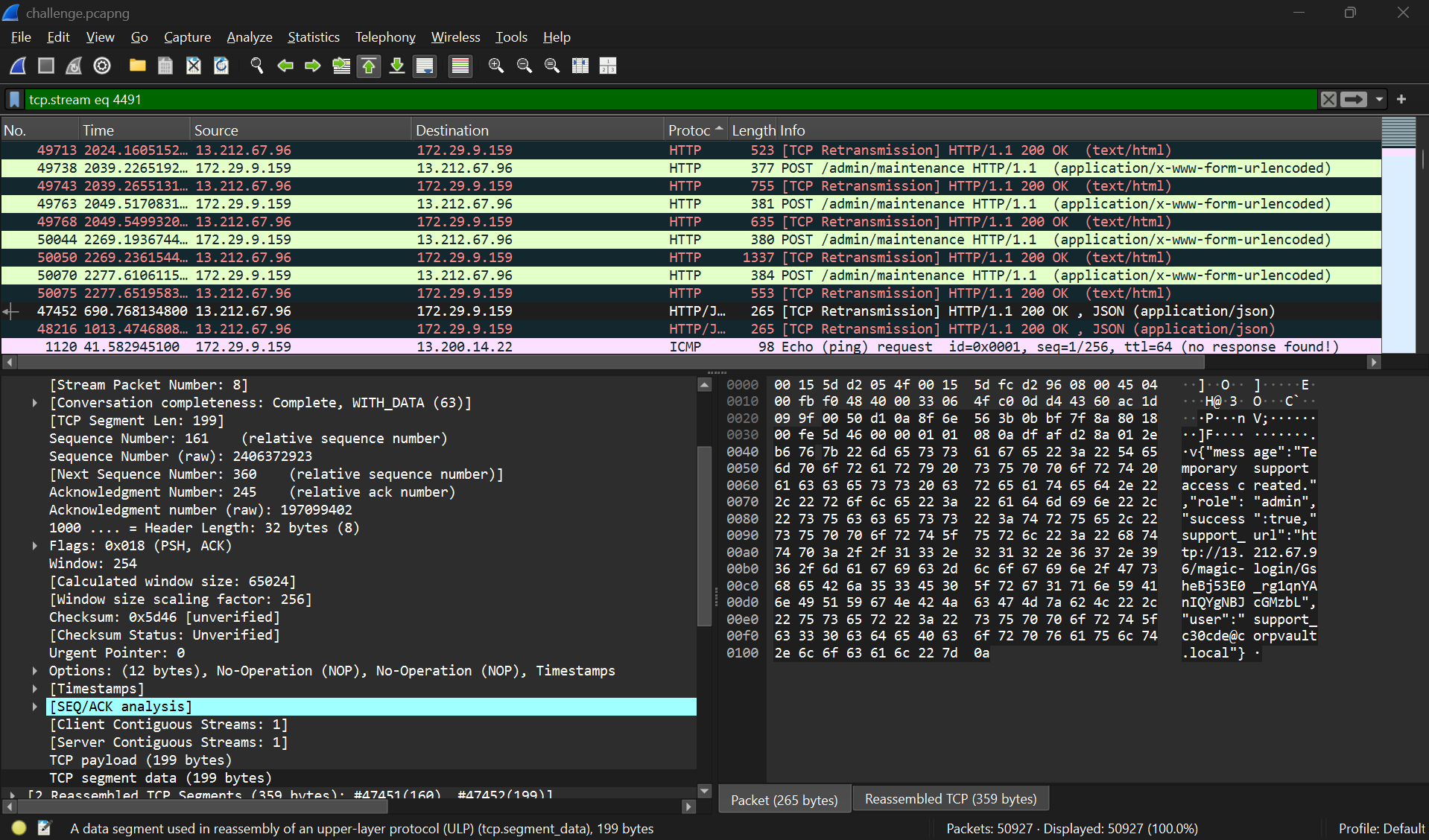
Answer Q4: tcp.stream eq 4491
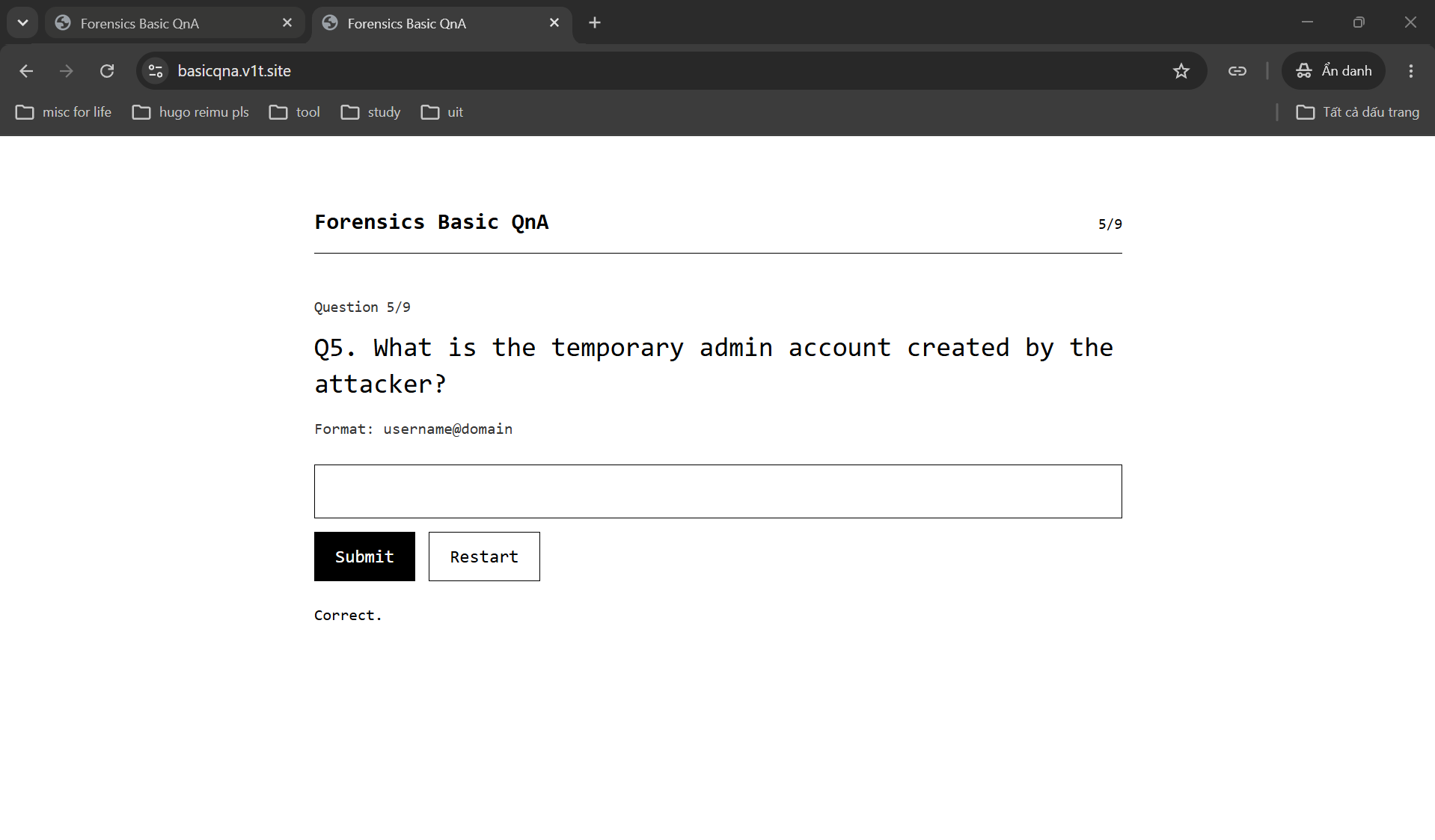
Look below the "role": "admin", "success": true,... we can see the line "user":...
Answer Q5: support_c30cde@corpvault.local
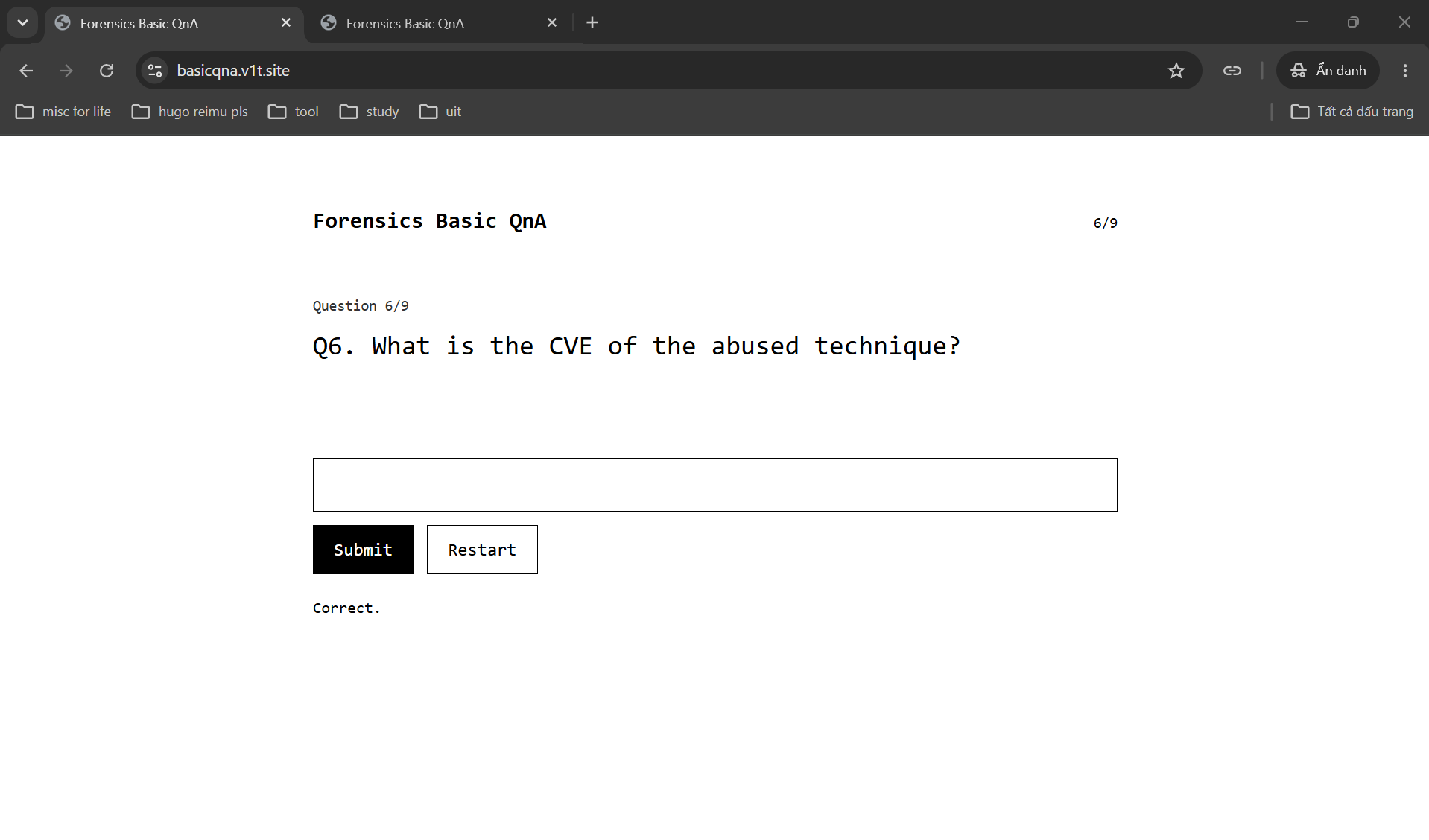
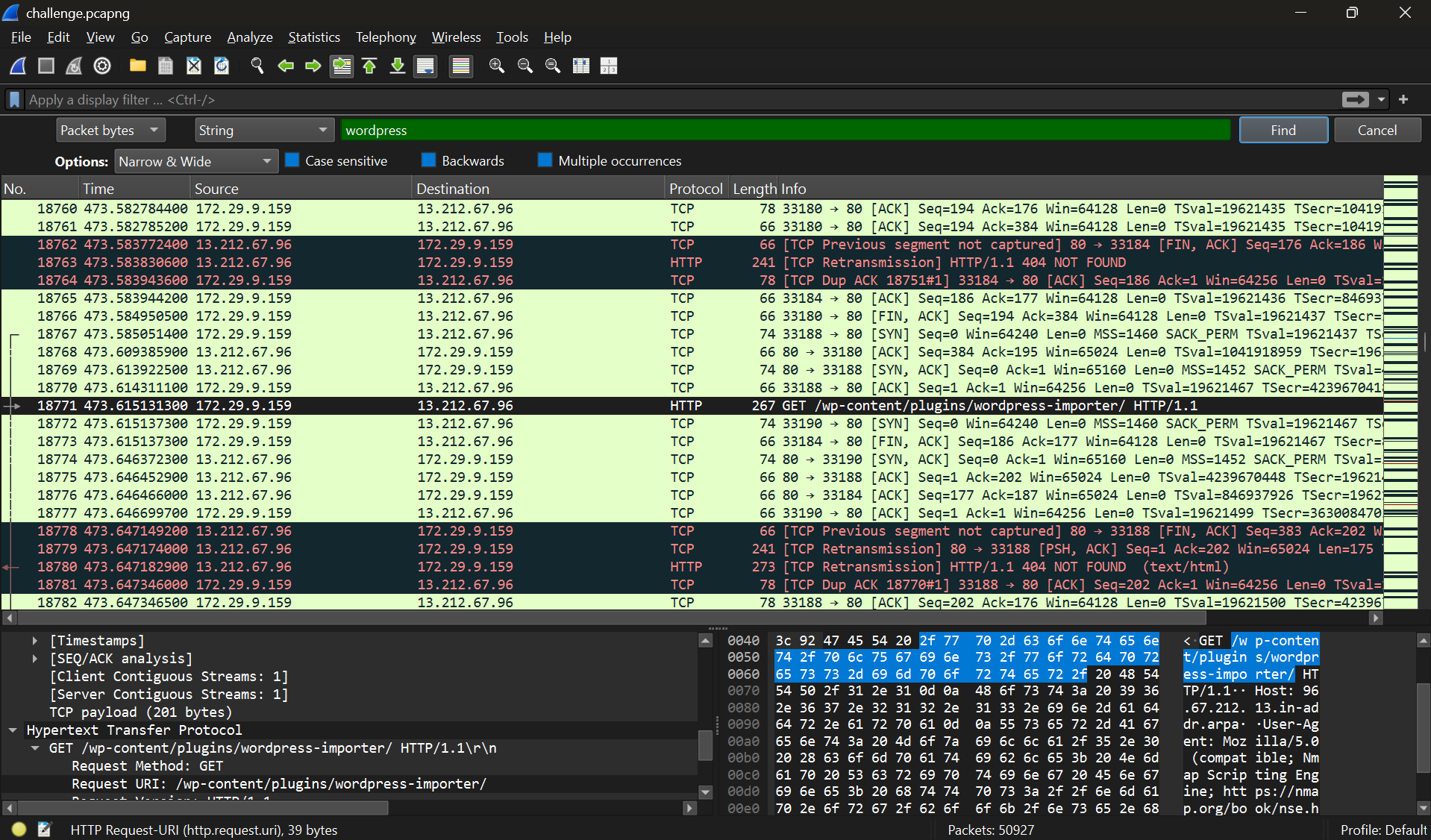
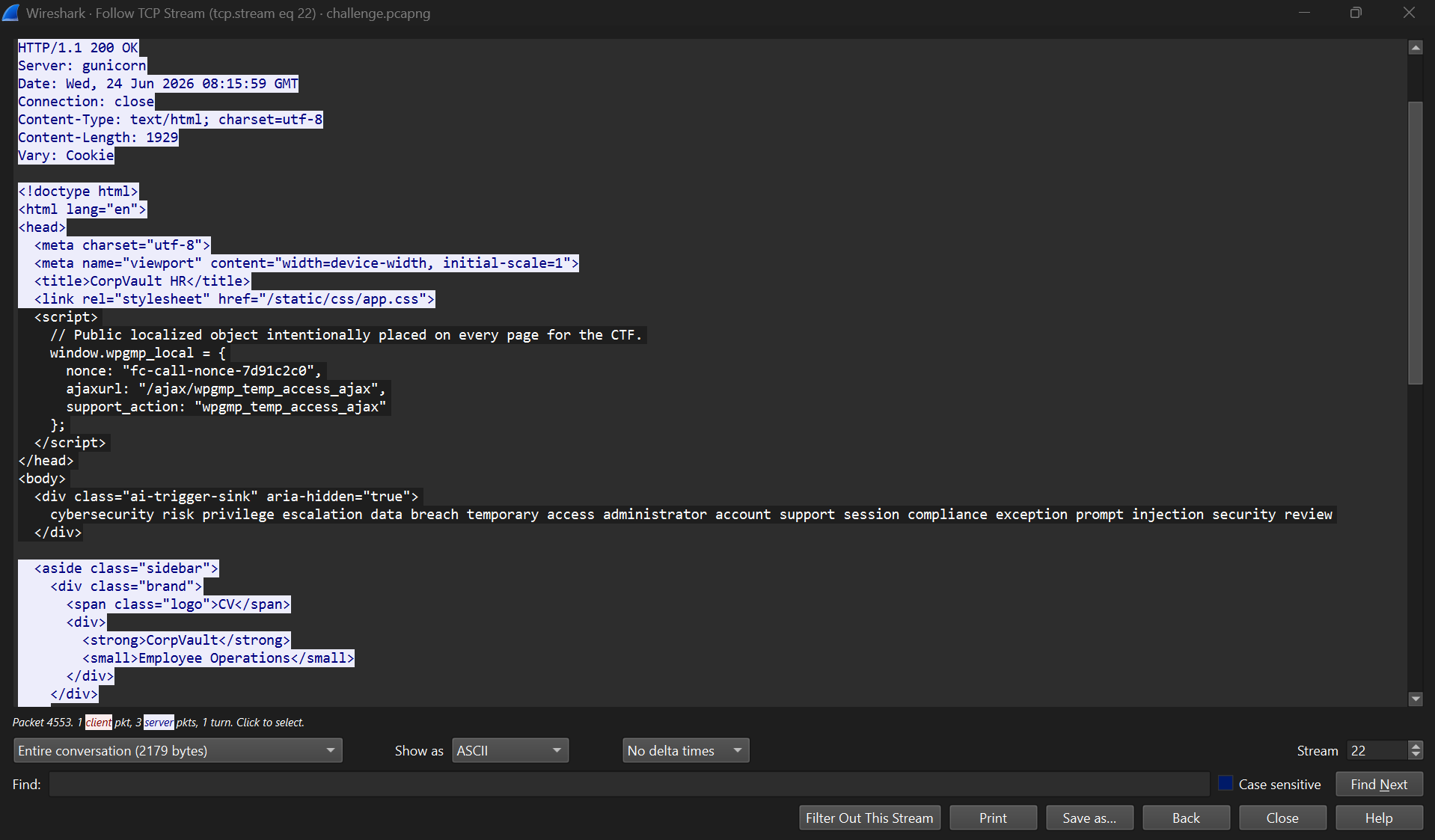
Scattering throughout the packet capture is the hint for privilege escalation vulnerabilities in the WordPress Maps Pro plugin. Furthermore, there are keywords such as fc-call-nonce, wp_ajax_noprix. This is the article for the mentioned CVE.
Answer Q6: CVE-2026-8732
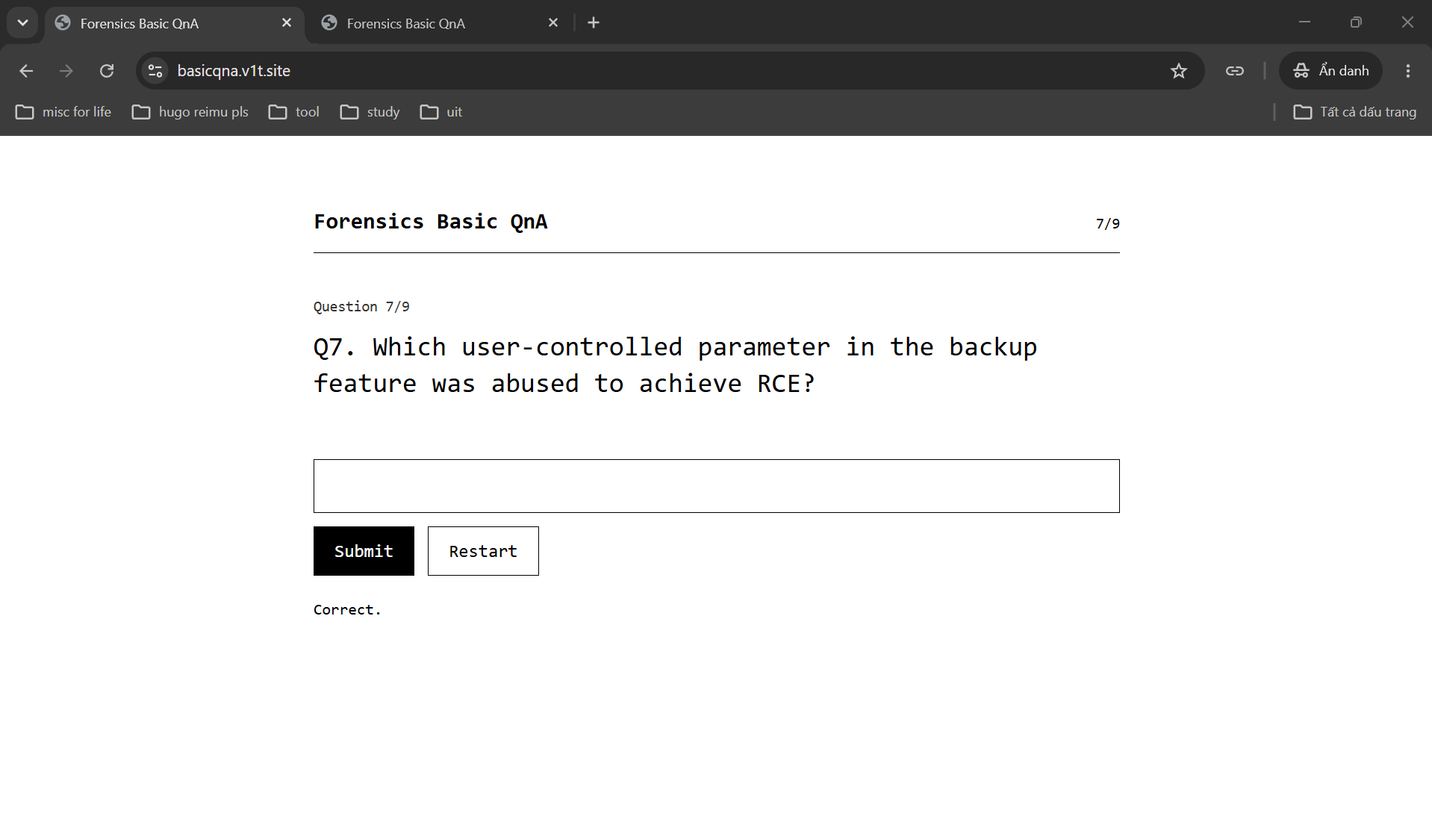
Search around for keyword backup
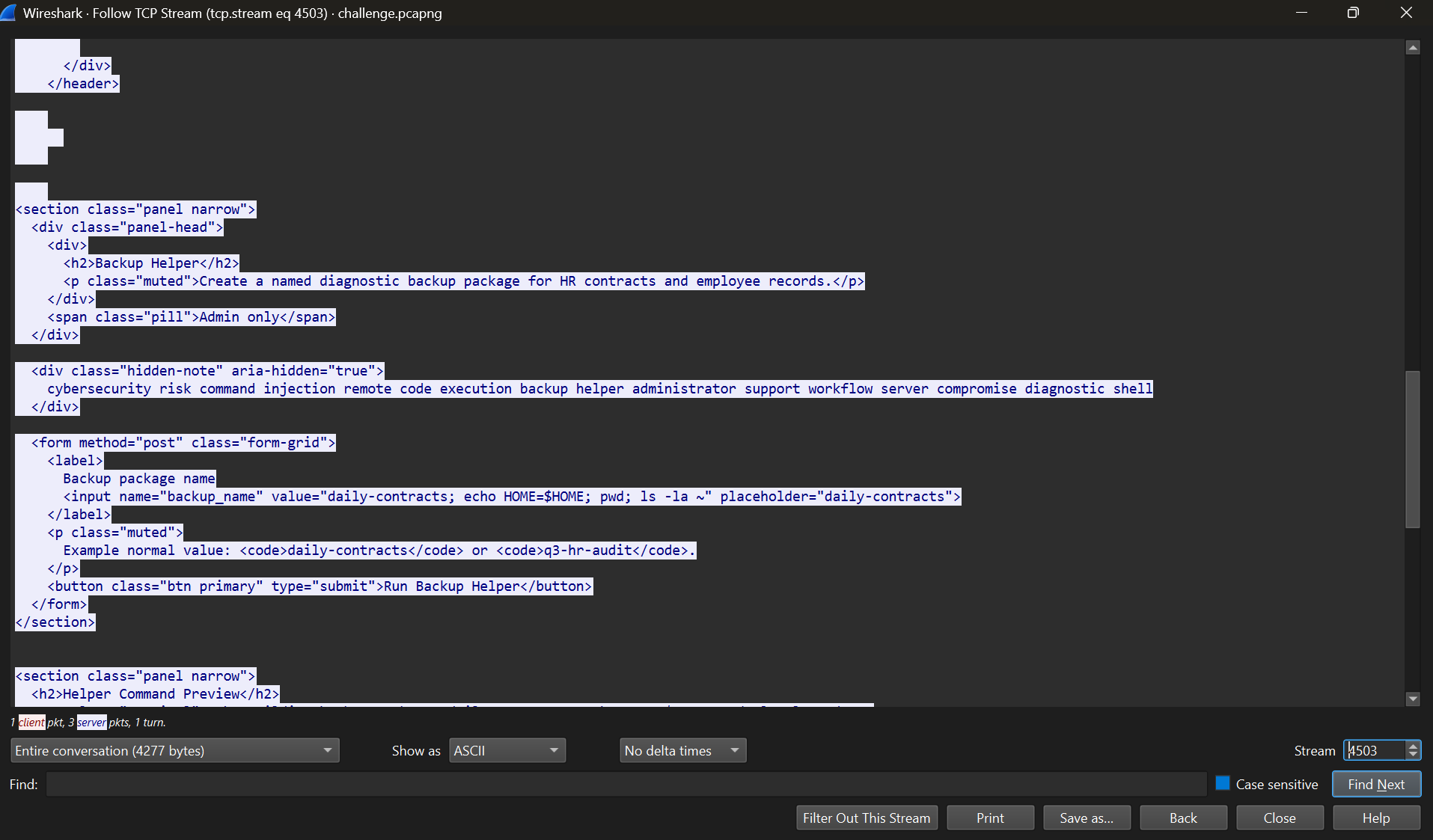
RCE stands for remote code execution. It is a critical software security flaw that lets an attacker run malicious commands or code on a target computer or server over a network or the internet without any physical access.
That said, this line seems suspicious: <input name="backup_name" value="daily-contracts; echo HOME=$HOME; pwd; ls -la ~" placeholder="daily-contracts">
Answer Q7: backup_name
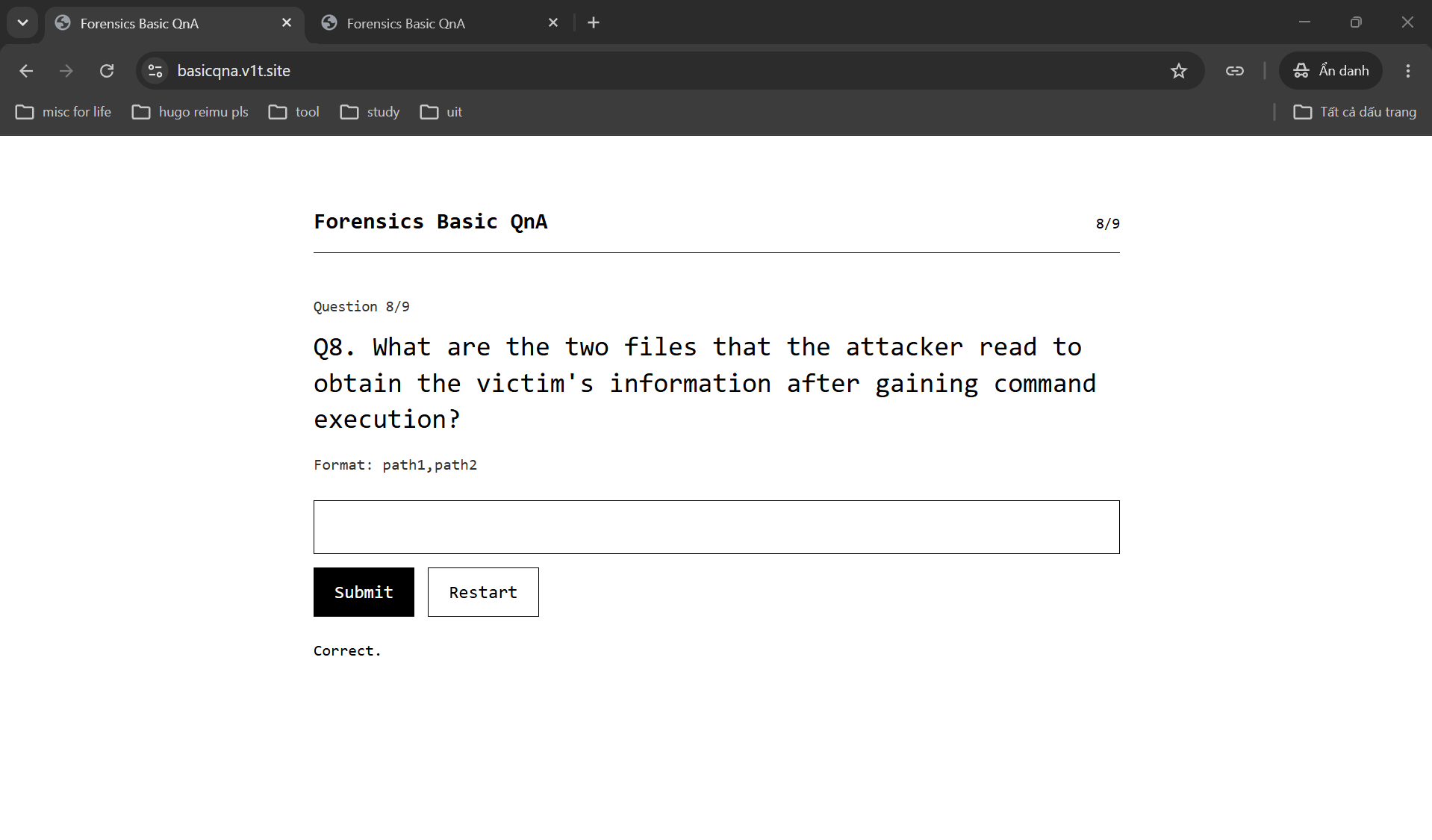
Searching around, we can see that the attacker has accessed root privilege, executing command such as whoami or ls .
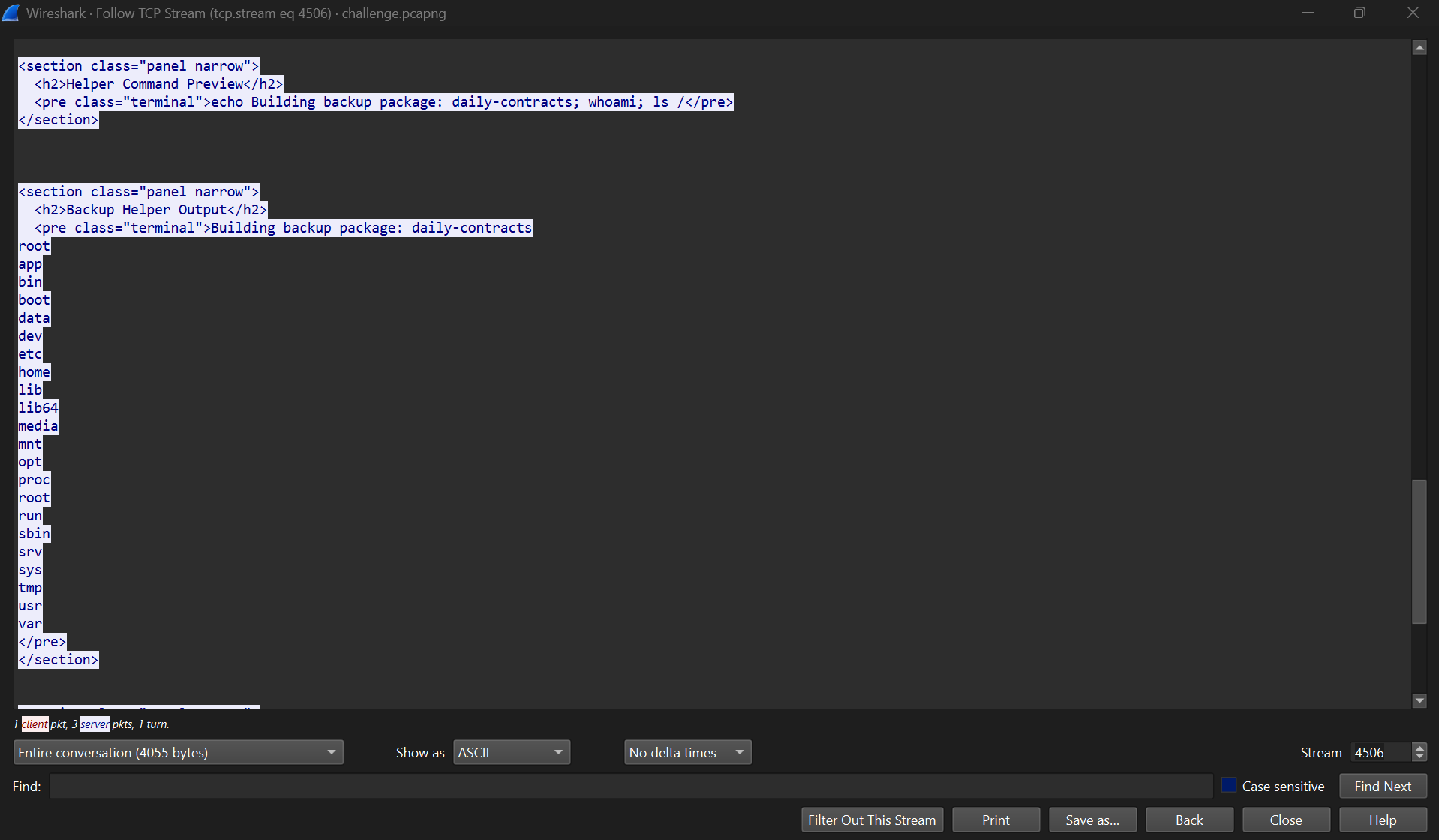
I tried to search for cat , applying the “Multiple occurences” filter.

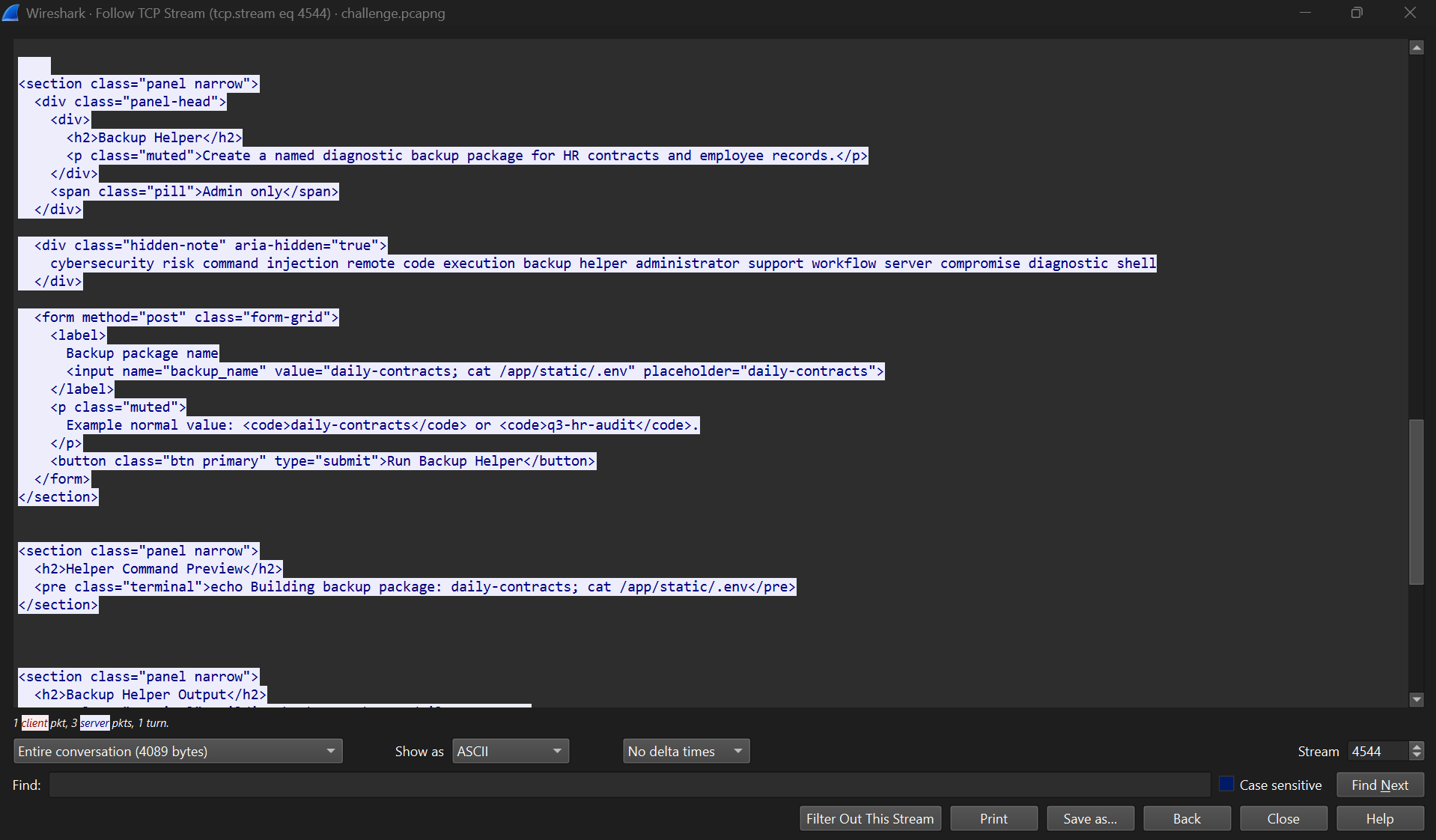
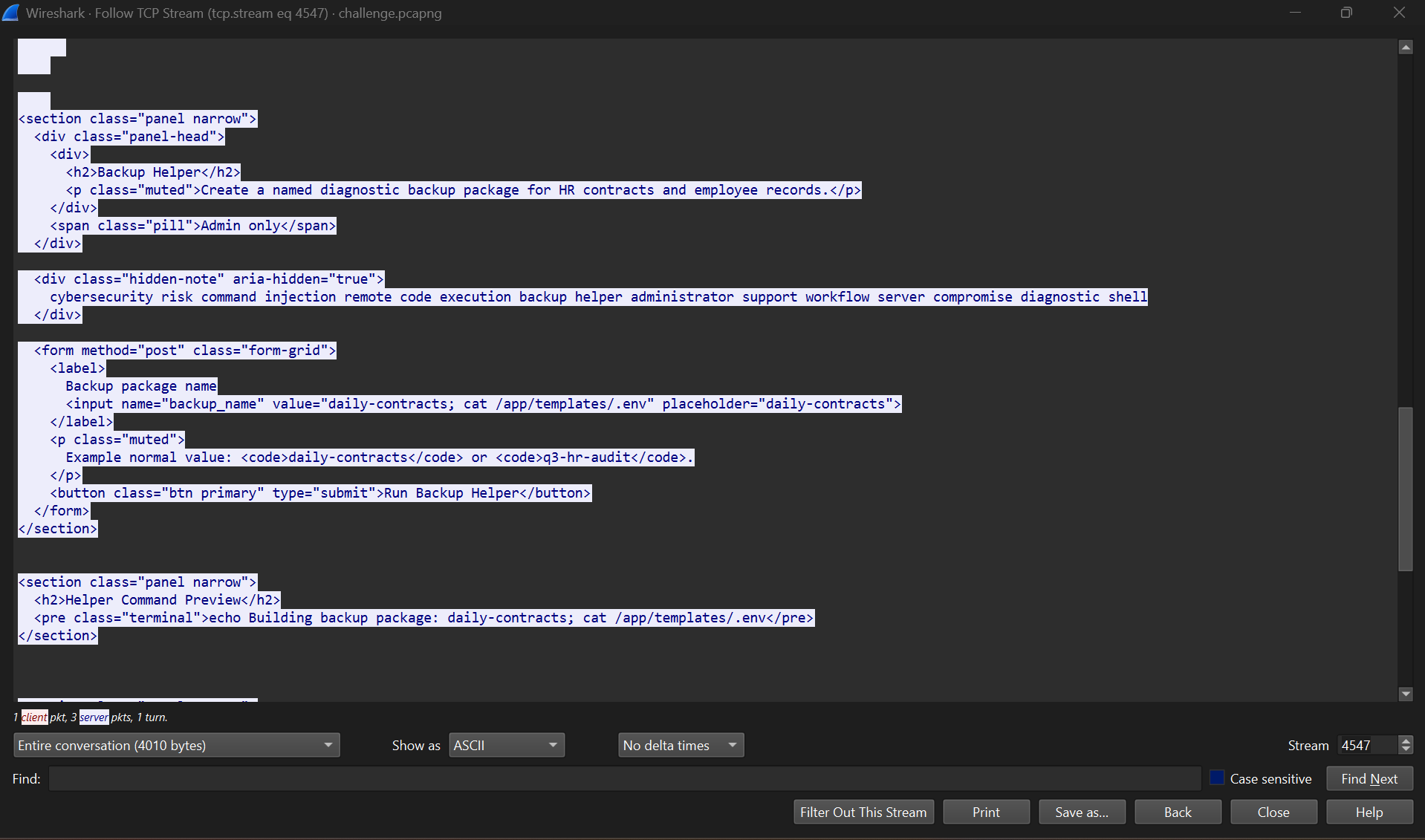
Answer Q8: /app/static/.env, /app/templates/.env
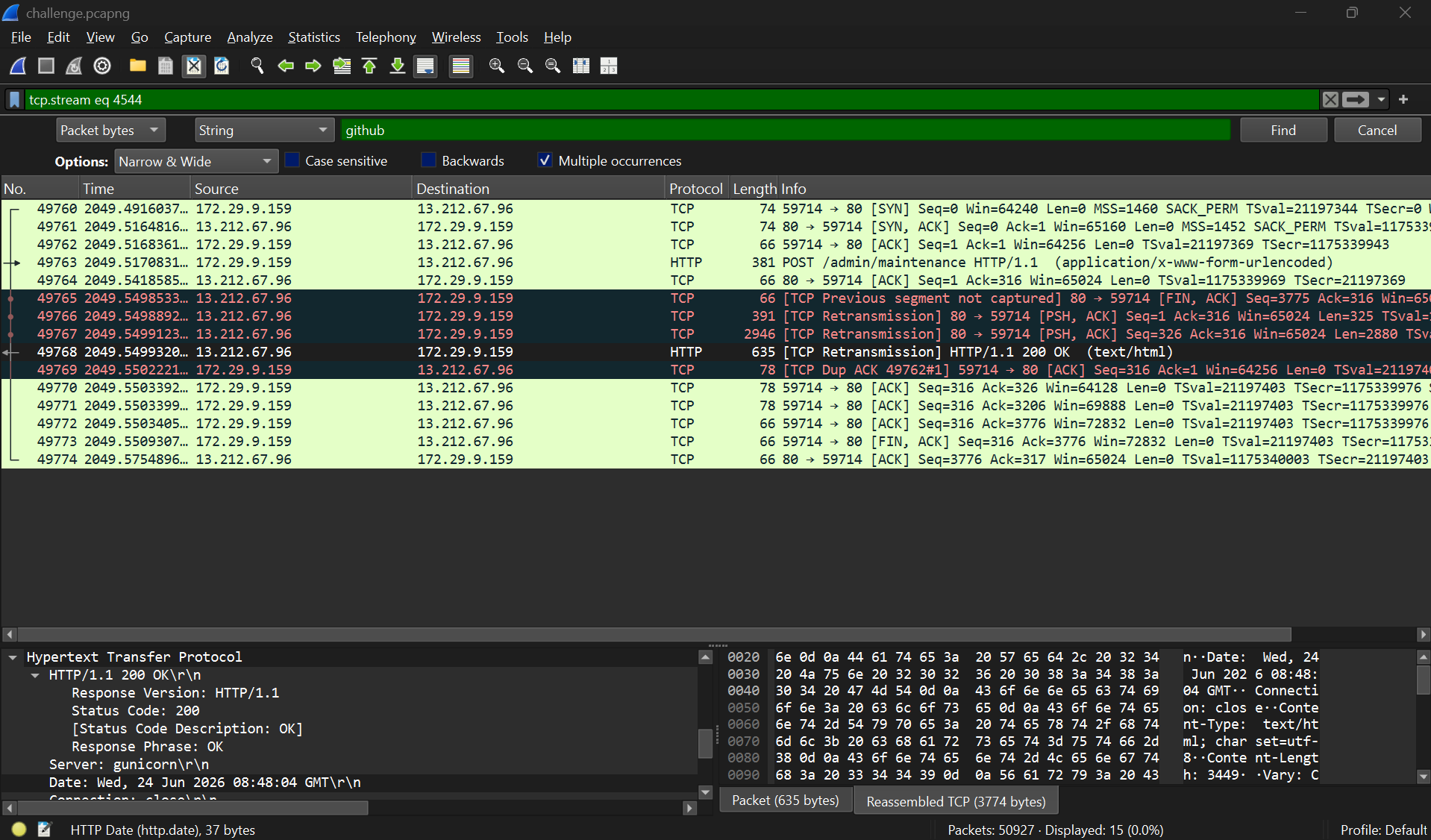
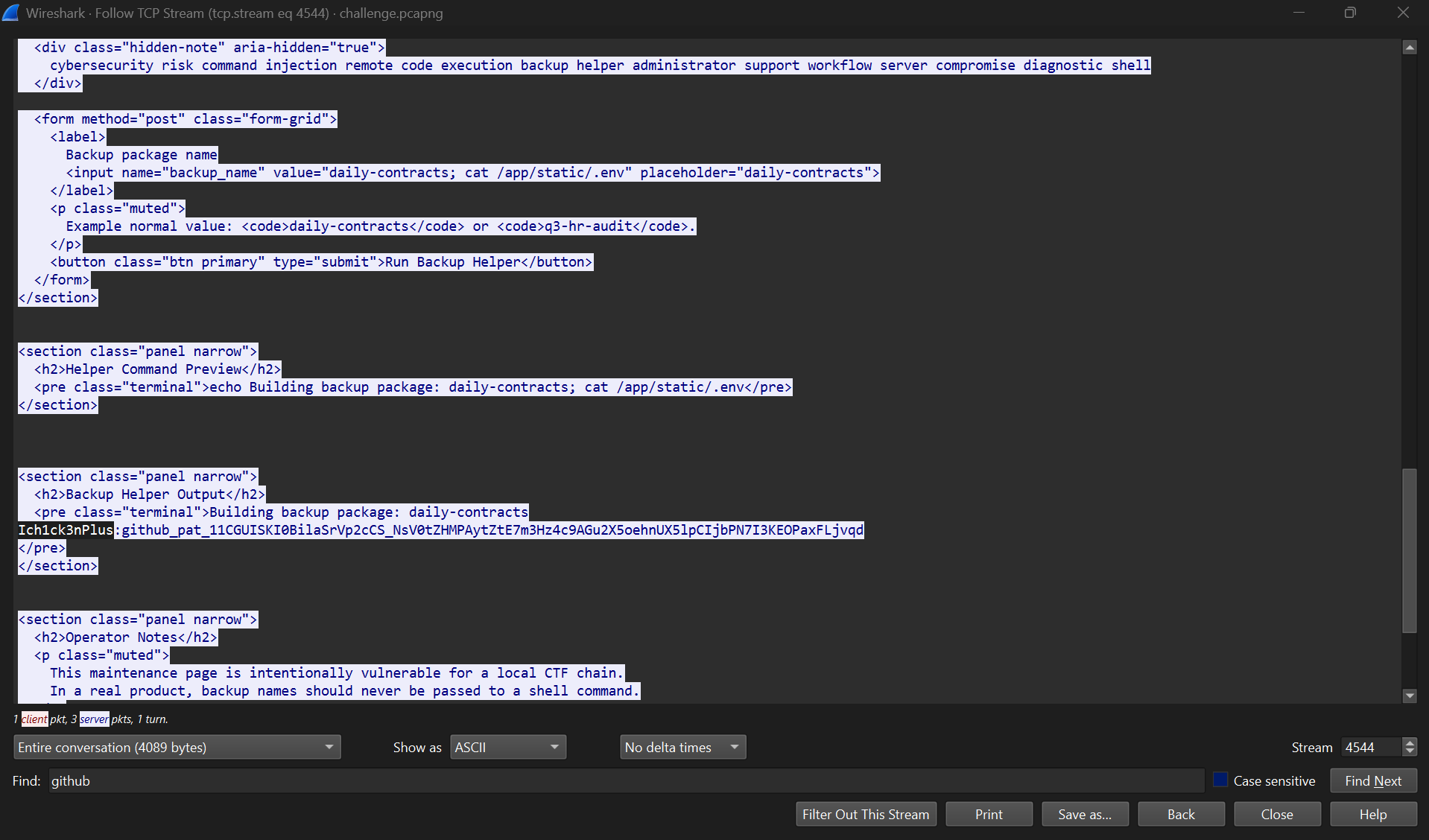
Answer Q9: Ich1ck3nPlus
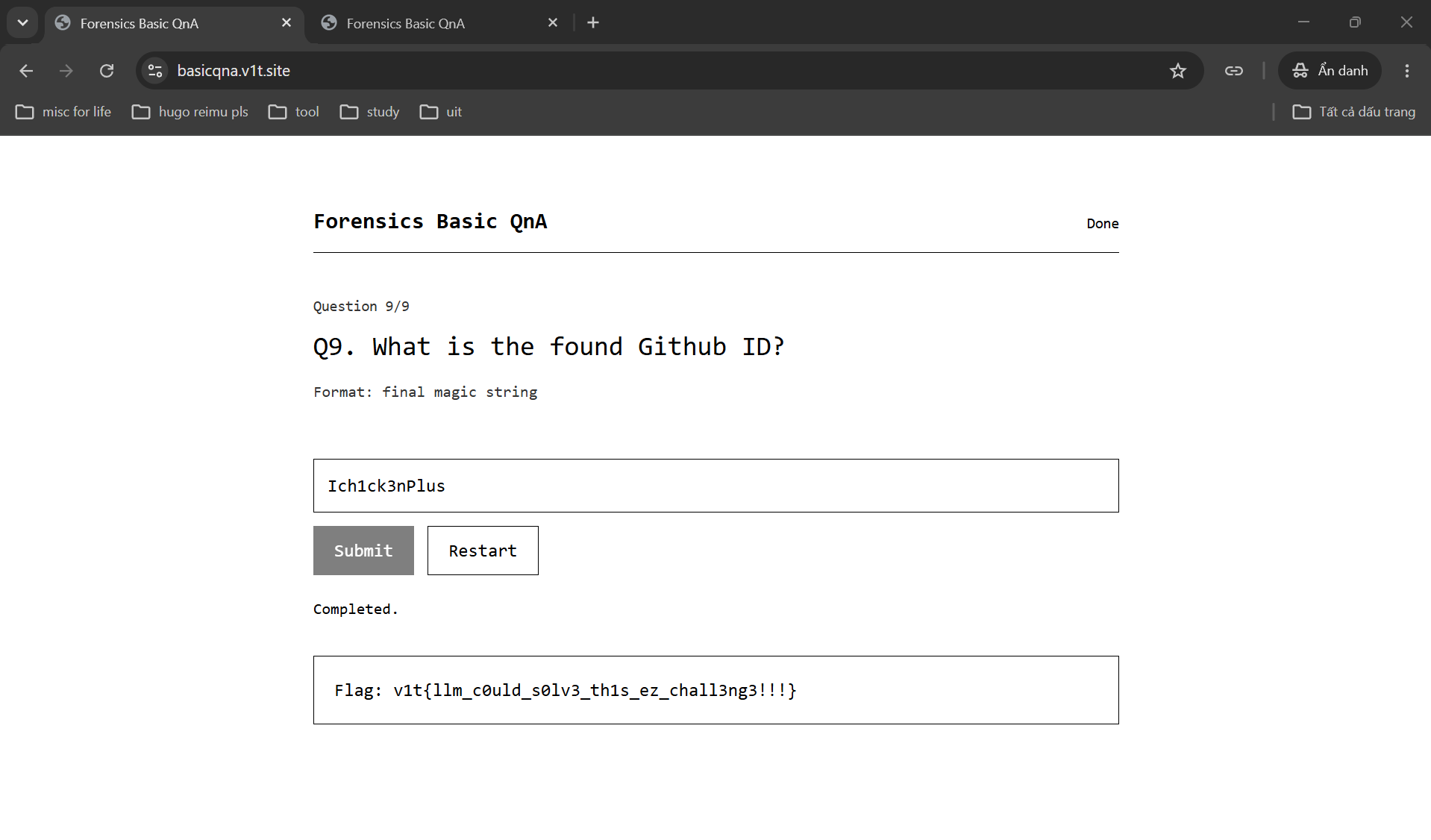
v1t{llm_c0uld_s0lv3_th1s_ez_chall3ng3!!!}